
We are saddened to announce that due to the COVID-19 epidemic COA will not be offering the 2021 Marine Mammal Scientist in Training Program this summer
After A LOT of deliberation among members of our team, we have decided that we will not be able to offer our typical MMST program this summer given the social distancing guidelines that we believe will continue to be imposed throughout the summer here in California.
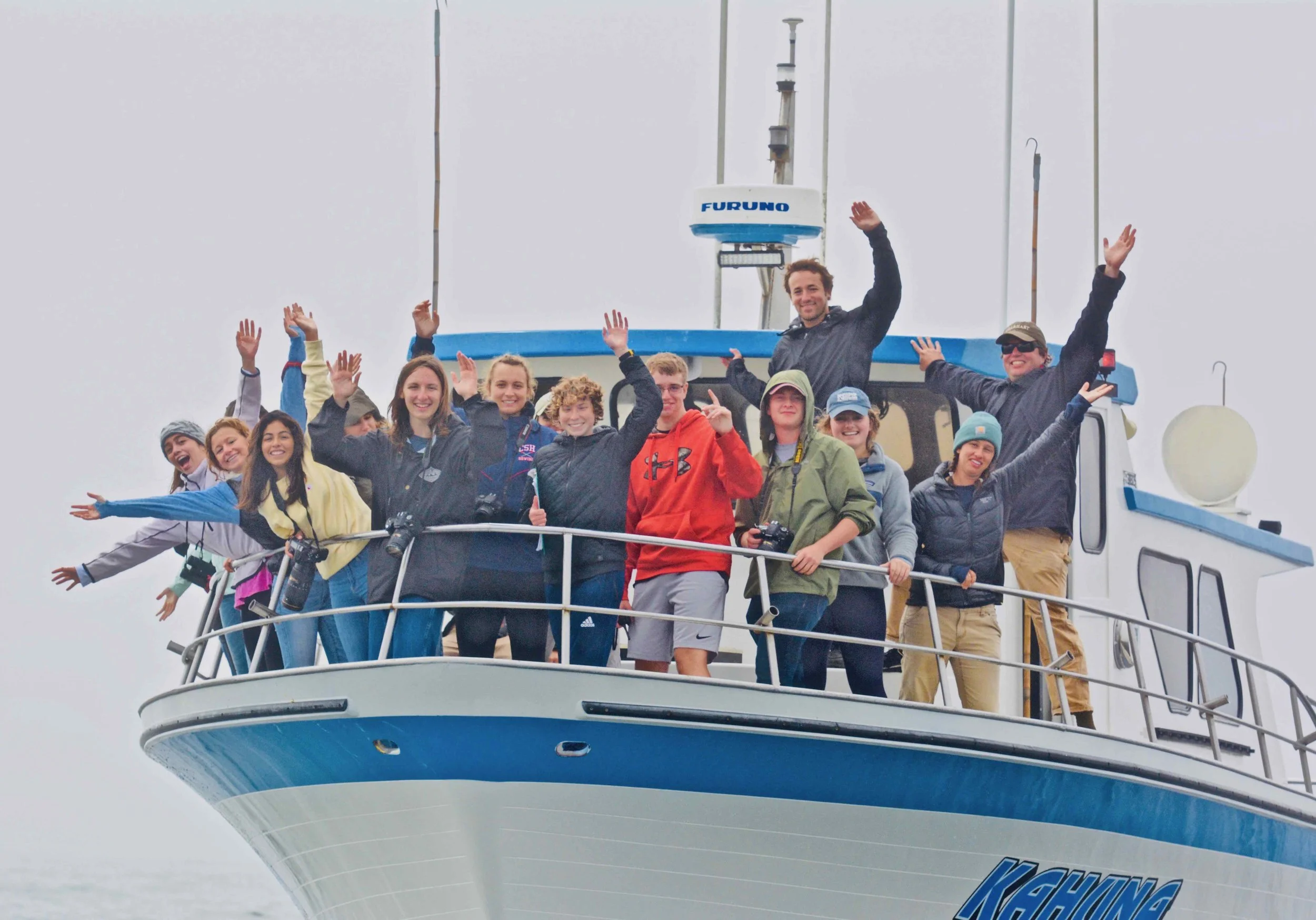
In thinking about this program, there simply isn't a way to safely offer students the experiences that make this opportunity so valuable - gathering on small boats together to observe humpback whales in Monterey Bay, traveling by van to visit the beaches of Año Nuevo to see elephant seals, or grouping together to observe animal necropsies. One of the strengths of the program is that we work hands-on together in very small teams and visit LOTS of different people and facilities throughout the week.
But…good newsQ we will be teaching an online course in marine mammal science and conservation. The online class will be offered July 5-9th and 19th-234d for 2-3 hours each day. Each day experts in marine mammal science, conservation, and policy will present their work, opportunities for engagement, and their personal journeys in the field. Additionally, we will be hosting several virtual tours of marine mammal research sites and facilities, so that participants can witness research and interact with scientists in real time. As well, students will be provided with real datasets from scientists using new and emerging technologies (e.g. tags, drones, acoustics) to study marine mammals, and will be guided through different learning modules to learn how to analyze and interpret these data. Please visit here for more information about our online course in marine mammal science and conservation!
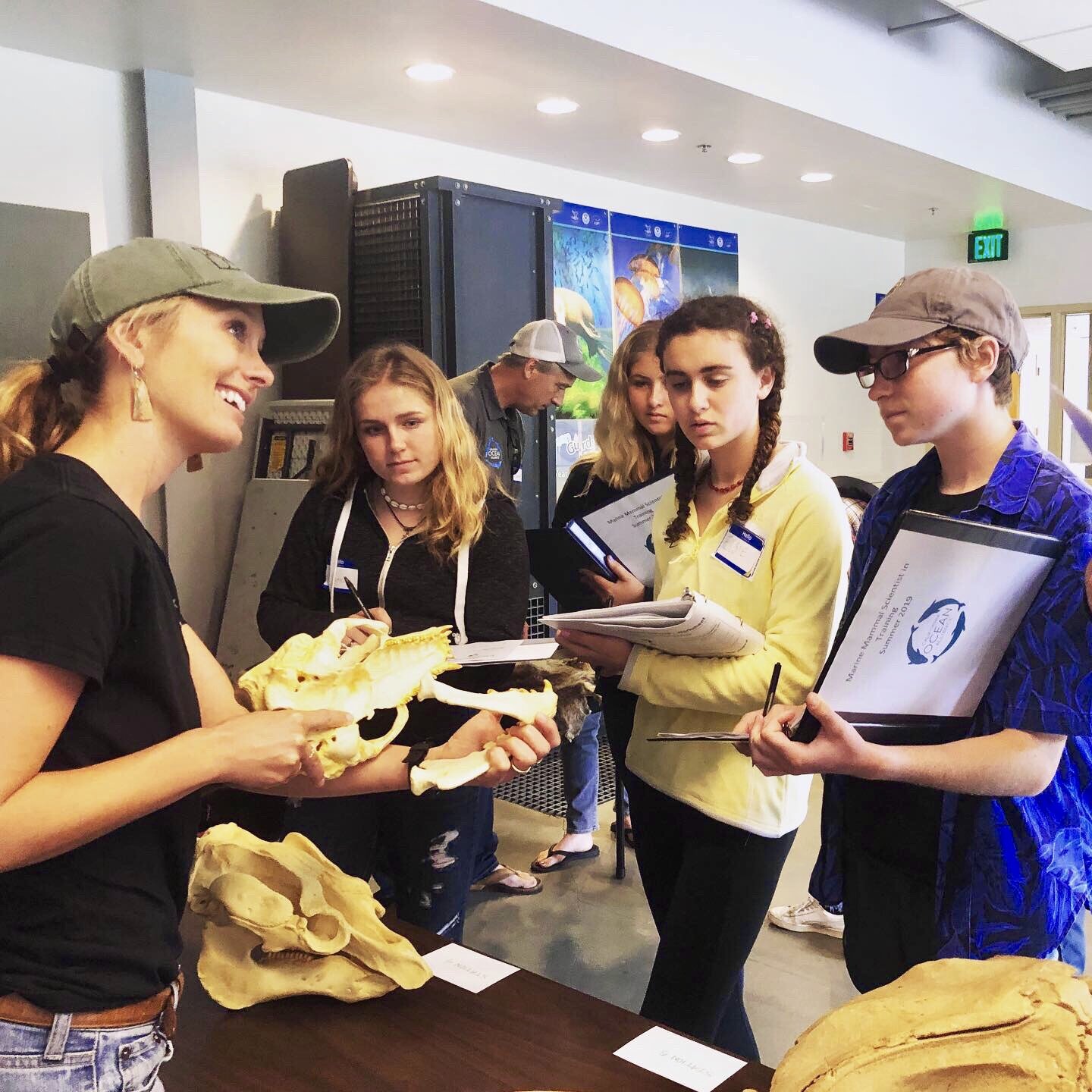
The Marine Mammal Scientist-in-Training Program is an engaging, immersive one-week educational course designed for high school students interested in pursuing a career in marine mammal biology and conservation. Through a combination of field and classroom-based experiences using cutting edge methods and technologies, students have the opportunity to work directly with world-leading marine mammal researchers. We are fortunate to collaborate with these local experts who give their time and expertise to this program solely to train and inspire the next generation of scientists and conservationists to appreciate and safeguard our precious marine resources.
We are no longer accepting applications for the 2020 Marine Mammal Scientist in Training Program.
Become a marine mammal scientist!
Work with experts in the field to learn how we study these amazing animals through an immersive summer 1-week course
Each student will have unique opportunities to work side-by-side with expert scientists to study seals, sea lions, whales, and dolphins here in Monterey Bay. Each participant will help collect data to document animal distribution, feeding and behavioral patterns, underwater sound, and gain hands-on experience using specialized marine research technology.
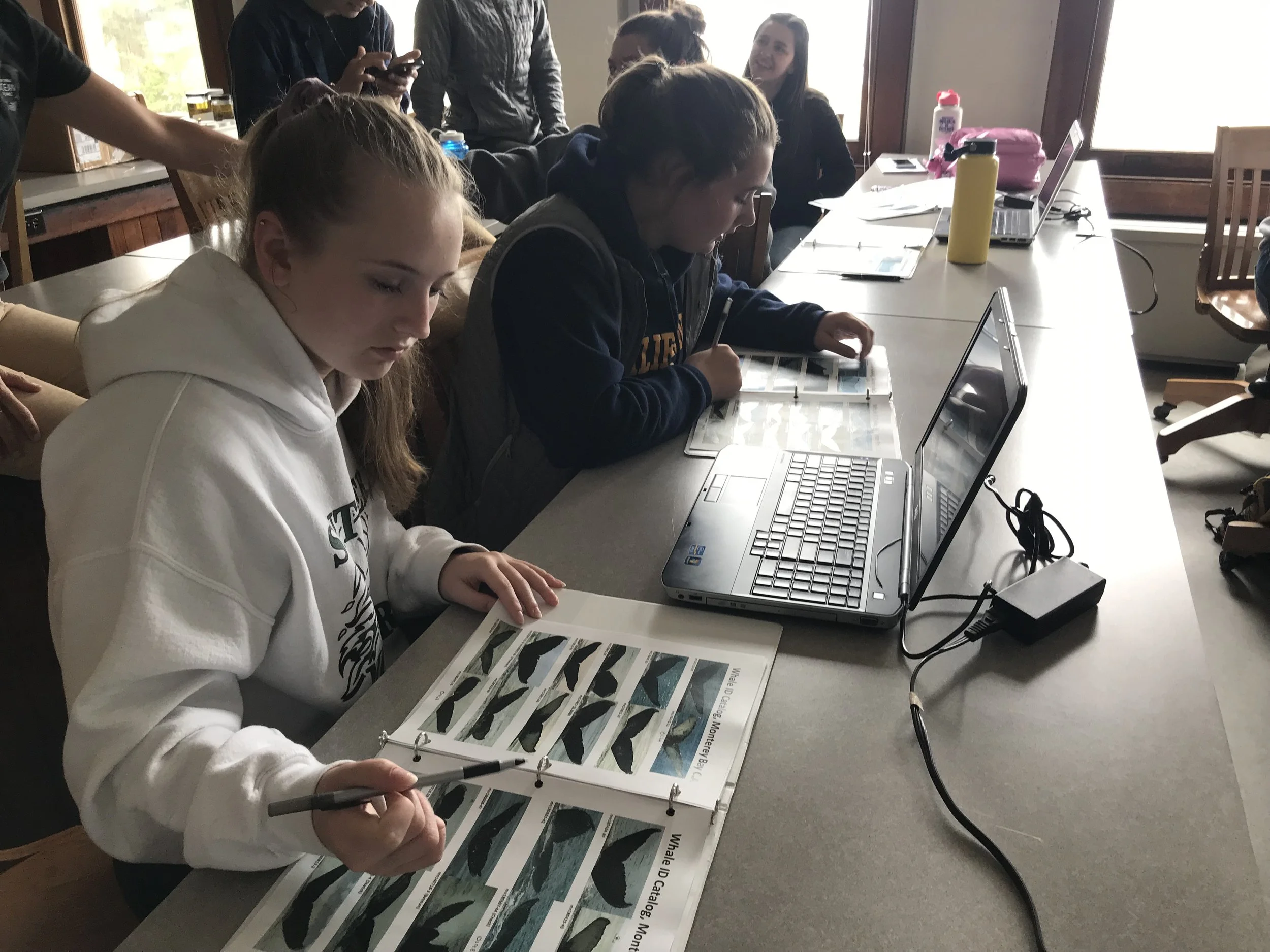
Students practicing their photo-identification techniques at Hopkins Marine Station in Monterey.
Students will participate in a variety of activities, including tracking humpback whales or other marine mammals in Monterey Bay by boat to learn about how these massive animals make a living, visiting UCSC’s Long Marine Laboratory to work with captive dolphins and seals, hiking Año Nuevo State Park beach trails to learn about the natural history of northern elephant seals, and kayaking in Elkhorn Slough to collect underwater sound recordings of different marine organisms in the marine soundscape. Each field experience will be supported and enhanced by a near-college-level scientific curriculum of lectures and labs about Monterey Bay marine ecosystems, with an emphasis on marine mammals. The curriculum includes an interdisciplinary approach that combines marine science, technology, engineering, and mathematics in a cohesive lesson plan that enables students to gain skills that have real-world implications for the study of marine mammal science and conservation.
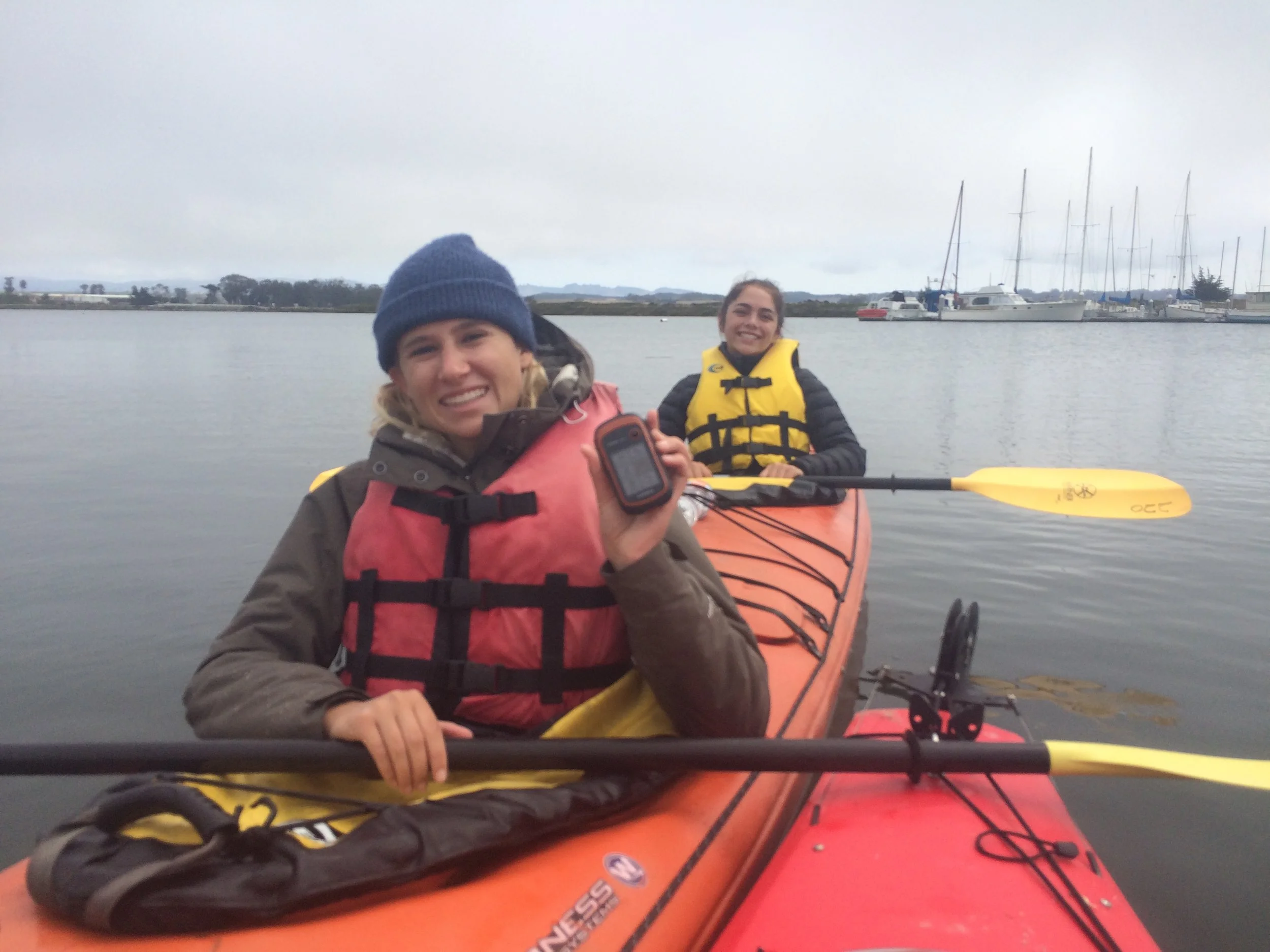
Explore the Marine Mammals of Monterey Bay
Learn about the natural history of whales, dolphins, seals, and sea lions right here in our own backyard!
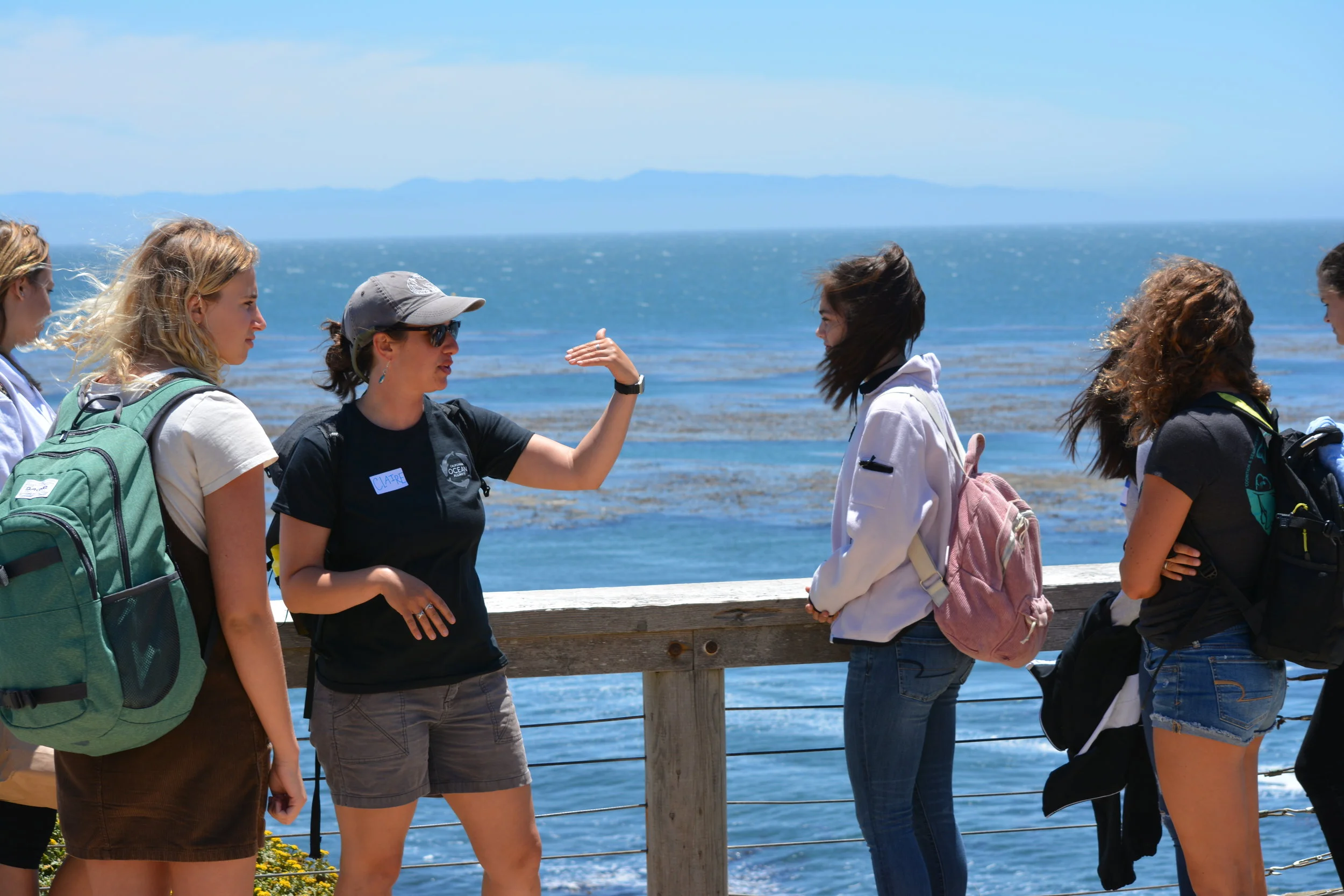
Marine education specialists will lead the course with extensive direct involvement from leading marine researchers from Hopkins Marine Station (Stanford University), the University of California Santa Cruz, and Moss Landing Marine Laboratory.
A marine mammal science camp graduate will have:
Fun and exciting stories to tell their friends and families about a one-of-a-kind experience
Received a certificate of completion signed by active researchers noting each student's accomplishments
Worked directly with marine mammals in the field to gain new skill sets related to becoming a marine mammal biologist
Participated in an in-depth variety of interactive, hands-on science learning and activities both in the classroom and field settings using state of the art research methods and technologies
A direct link and long-lasting relationship with local professors and researchers in the field
Group video and photos of their experience to share with friends/family
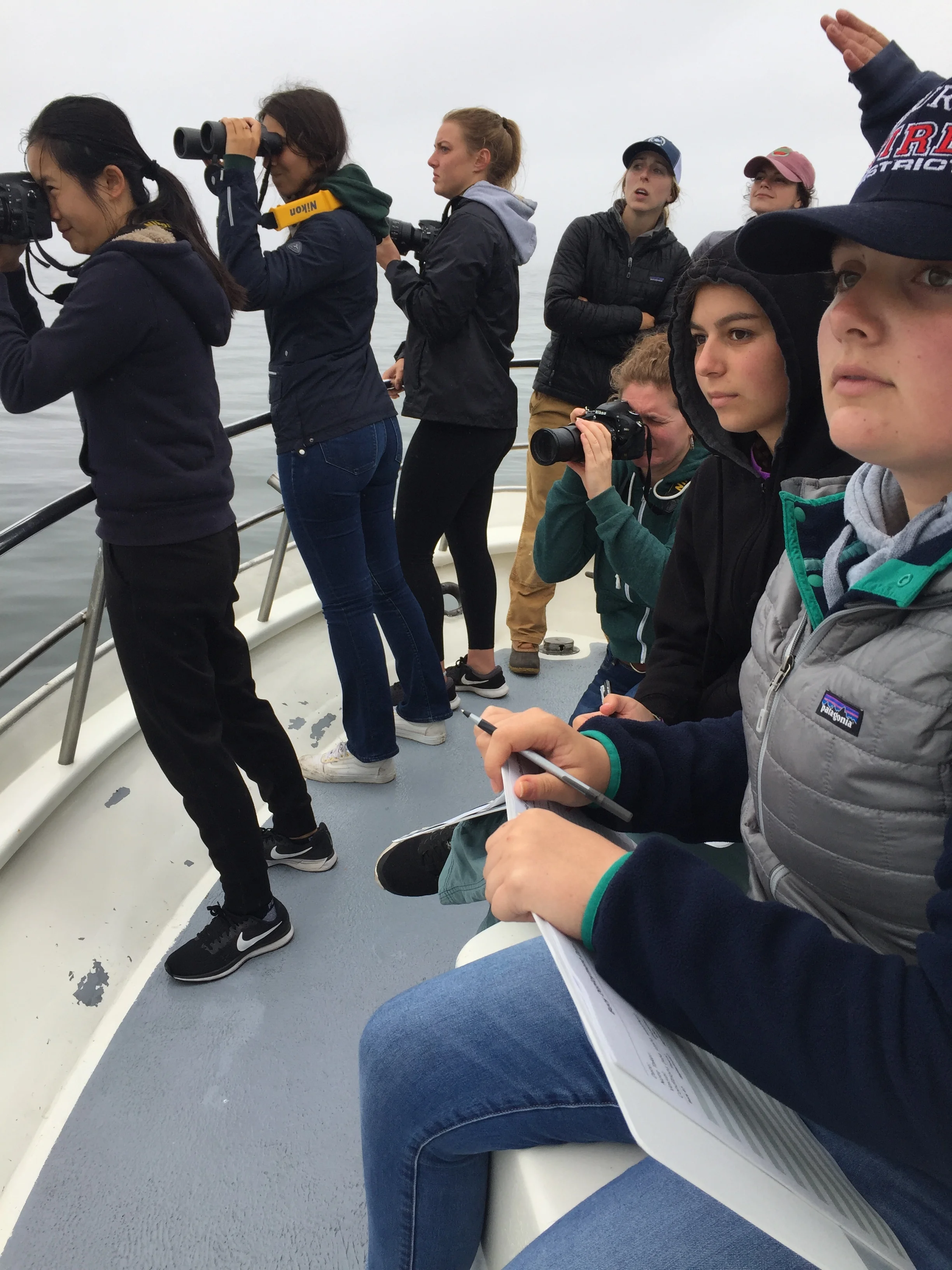
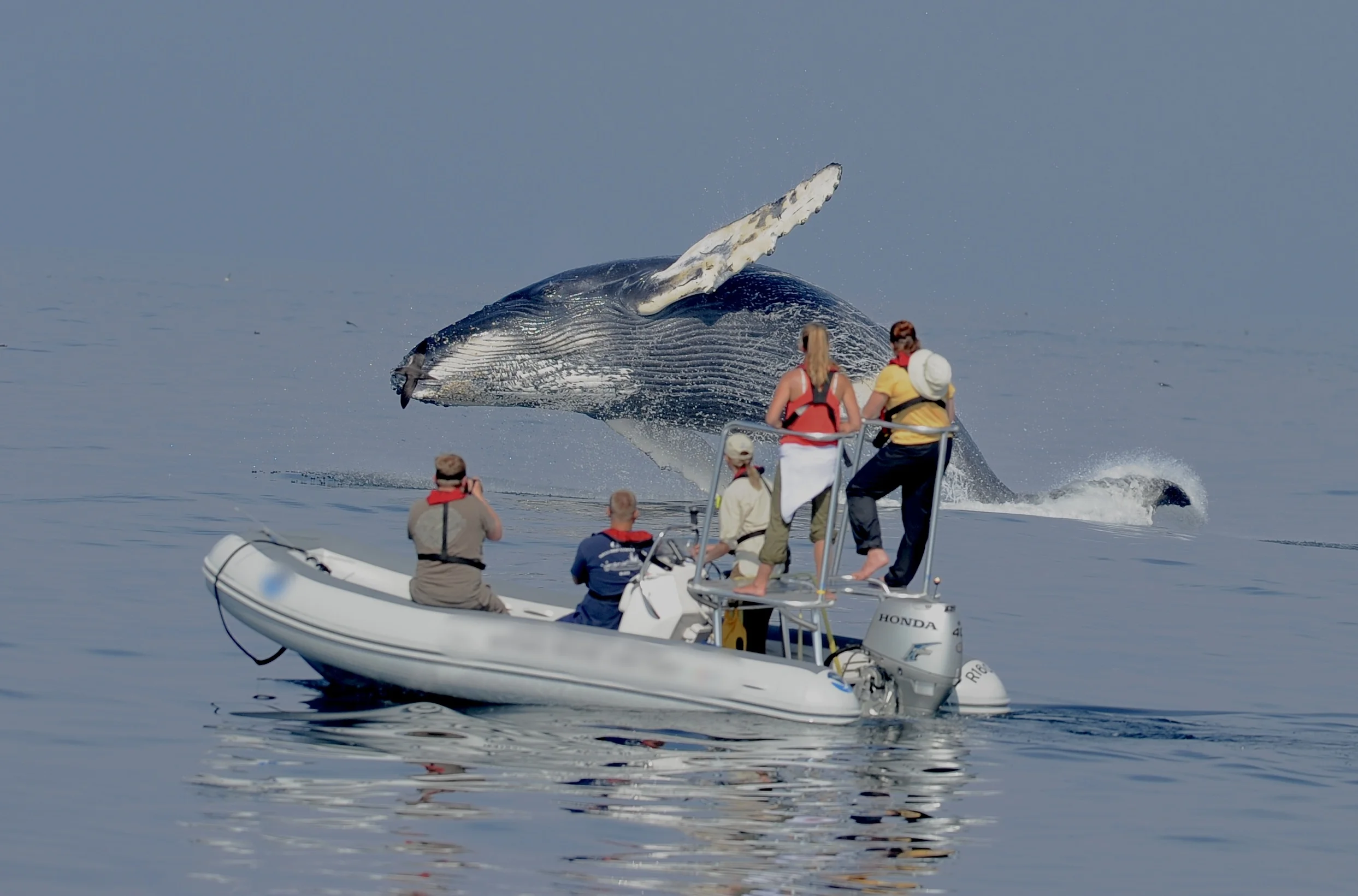
MMST students observe the behavior of humpback whales in Monterey Bay